
Skip to the content
  • +90 (312) 290 2513
  • unam@unam.bilkent.edu.tr
  • UNAM Facility : +90 (312) 290 80 45
  • UNAM-IS
  • TR
Search
Close
  • Main Menu
    • News
    • Events
      • Events
      • Nanodays
      • NanoArt
      • Nanocolloquiums
      • Thursday Seminars
      • UNAM Science Workshop
    • Announcements
    • Multimedia
      • Multimedia
      • Corporate identity
    • Contact
  • Corporate
    • Mission-Vision-Strategic Goals-Values
    • About
    • Message from The Director
    • UNAM 6550
    • Annual Reports
    • UNAM by Numbers
    • Our Teams
      • Organization Chart
      • UNAM Board of Governance
      • Director’s Office
      • Principal Investigators
      • Administrative Staff
      • Operations Team
      • Project Engineers
      • Postdoctoral Fellows
      • UNAM Visiting Scholars
      • MSN Graduate Students
      • Other Graduate Students
      • PhD Alumni
      • Ms Alumni
      • Completed Theses
    • Awards
      • Faculty Awards
      • Researcher and Student Awards
    • Business Ecosystem
    • Career
    • Gender Equality at UNAM
      • Gender Equality Plan
      • Gender Equality Capacity Assessment Quentionnaire Analysis
  • Research
    • Research Fields
    • Projects
    • Publications
    • Patents
    • Research Groups
  • Education
    • Education
    • MSN Program
      • MSN Masters Program
      • MSN Ph.D. Program
      • Thesis Submission and Approval Process
    • UNAM Scholarship Opportunities
    • MSN Courses
    • Internship Application Form
    • HST
    • Alumni
      • MS Alumni
      • PhD Alumni
      • Theses
  • Facility
    • UNAM Facility
    • Infrastructure Service Fee
    • UNAM-IS
    • UNAM Store
    • UNAM Rentals
    • Safety
    • Facility Rules
Menu
  • Main Menu
    • News
    • Events
      • Events
      • Nanodays
      • NanoArt
      • Nanocolloquiums
      • Thursday Seminars
      • UNAM Science Workshop
    • Announcements
    • Multimedia
      • Multimedia
      • Corporate identity
    • Contact
  • Corporate
    • Mission-Vision-Strategic Goals-Values
    • About
    • Message from The Director
    • UNAM 6550
    • Annual Reports
    • UNAM by Numbers
    • Our Teams
      • Organization Chart
      • UNAM Board of Governance
      • Director’s Office
      • Principal Investigators
      • Administrative Staff
      • Operations Team
      • Project Engineers
      • Postdoctoral Fellows
      • UNAM Visiting Scholars
      • MSN Graduate Students
      • Other Graduate Students
      • PhD Alumni
      • Ms Alumni
      • Completed Theses
    • Awards
      • Faculty Awards
      • Researcher and Student Awards
    • Business Ecosystem
    • Career
    • Gender Equality at UNAM
      • Gender Equality Plan
      • Gender Equality Capacity Assessment Quentionnaire Analysis
  • Research
    • Research Fields
    • Projects
    • Publications
    • Patents
    • Research Groups
  • Education
    • Education
    • MSN Program
      • MSN Masters Program
      • MSN Ph.D. Program
      • Thesis Submission and Approval Process
    • UNAM Scholarship Opportunities
    • MSN Courses
    • Internship Application Form
    • HST
    • Alumni
      • MS Alumni
      • PhD Alumni
      • Theses
  • Facility
    • UNAM Facility
    • Infrastructure Service Fee
    • UNAM-IS
    • UNAM Store
    • UNAM Rentals
    • Safety
    • Facility Rules

Bilkent-Led Studies Identify Genes Behind Drug Resistance in Breast Cancer

  • News 2018
  • February 12, 2018
Bilkent-Led-Studies-Identify-Genes-Behind-Drug-Resistance-in-Breast-Cancer

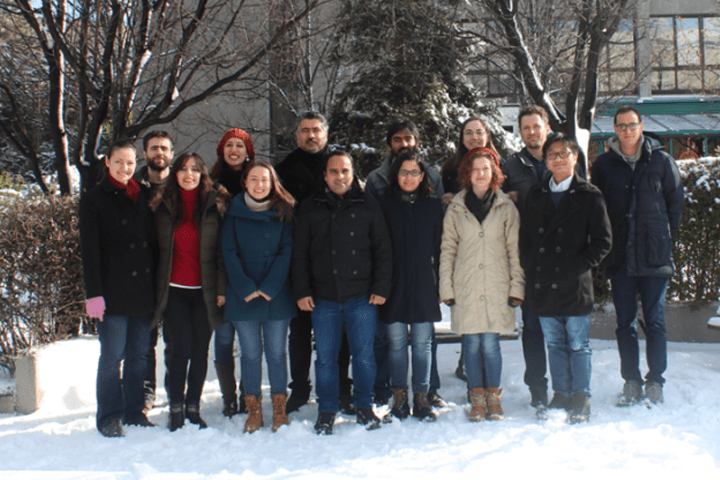
Asst. Prof. Özgür Şahin, a faculty member in the Department of Molecular Biology and Genetics (MBG) and UNAM, and his team have recently published their work in two leading journals in the field of cancer: the Nature Publishing Group journal Oncogene, and the American Association for Cancer Research (AACR) journal Clinical Cancer Research. In two preclinical studies, Dr. Şahin and his team identified genes responsible for drug resistance in two subtypes of breast cancer. They showed that targeting the proteins synthesized by these genes reverses resistance and causes tumor shrinkage in mouse models of the disease. Asst. Prof. Can Alkan, a faculty member in the Department of Computer Engineering, contributed to the first study, while Asst. Prof. Çağlar Çekiç, an MBG and UNAM faculty member, contributed to the second.

Development of drug resistance is one of the major obstacles to effective cancer treatment, and one of the leading causes of cancer-related deaths. Cancer cells develop resistance to a variety of anticancer therapeutics, including chemotherapy and targeted therapy agents. Identifying the molecular mechanisms of drug resistance and thereby increasing the effectiveness of drugs by targeting the identified molecules is crucial and will have a huge impact on improving patient outcome.

In the first project, which was funded by TÜBİTAK, Dr. Şahin and his team identified the molecular mechanisms of resistance against the drug trastuzumab-emtansine
(T-DM1). T-DM1 was approved by the US Food and Drug Administration (FDA) in 2013 and since then has been used in metastatic HER2-positive breast cancer patients, who constitute around 20 percent of all breast cancer patients. This study identified the protein polo-like kinase 1 (PLK1) as being upregulated in T-DM1 resistance and demonstrated that targeting PLK1 with a small- molecule inhibitor, volasertib, increases drug sensitivity.

In the second project, which was funded by the European Molecular Biology Organization (EMBO), the researchers demonstrated that hyperactivation of the enzyme phosphodiesterase 4D, which is produced by the PDE4D gene, is responsible for resistance to tamoxifen. Tamoxifen has long been used to treat ER-positive breast cancer, which constitutes around 70 percent of all breast cancer cases. Targeting phosphodiesterase 4D with dipyridamole or aspirin enhanced tamoxifen response in cell-line and mouse models of tamoxifen-resistant ER-positive breast cancer. Interestingly, this study demonstrated that aspirin, a drug that has been used for over a century for various purposes, can overcome tamoxifen resistance and decrease tumor burden in ER-positive breast cancer.

These two preclinical studies have identified two important genes mediating drug resistance and paved the way toward testing drugs that are either being tested in clinical trials for other cancers (e.g., volasertib) or already approved by the FDA (e.g., aspirin) in clinics for treatment-refractory breast cancer subtypes in the near future.

Facebook
Twitter
LinkedIn
Pinterest
WhatsApp

Sign up for our newsletter

You can sign up for our e-mail newsletter to be informed about announcements and events.

Sanal Tur 360°

Multimedya

İletişim

Nanokids

Facebook-f Twitter Instagram Youtube Linkedin Spotify

Bilkent University UNAM
National Nanotechnology Research Center

 Institute of Materials Science and Nanotechnology

Bilkent University Ankara, 06800, Turkey
Tel: +90 312 290 2513 Fax: +90 312 266 4365

© All Rights Reserved. UNAM 2023

UNAM IT