
- This event has passed.
Spatially coherent exciton ensembles in two-dimensional heterostructures
8 October 2025 @ 11:00 - 13:00
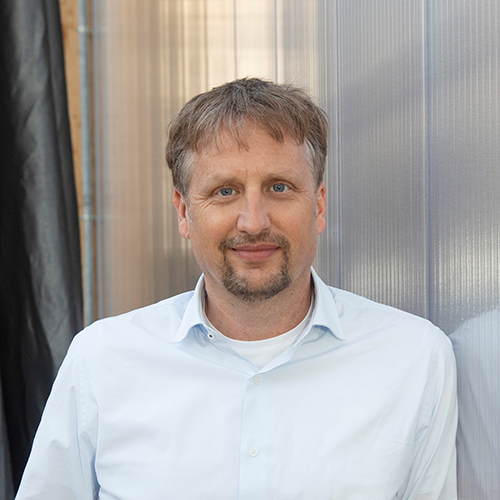
Alexander Holleitner
Technical University of Munich
Heterostructures made from two-dimensional (2D) transition-metal dichalcogenides exhibit a very large light-matter interaction [1], and they are ideal platforms to explore excitonic phenomena ranging from correlated moiré excitons to degenerate interlayer exciton ensembles with a spatially extended coherence at cryogenic temperatures [1-4]. I will highlight the experimental signatures of quantum mechanically degenerate and coherent exciton ensembles in 2D heterostructures. Moreover, I will discuss how the real-space wave function of the excitons can be understood in reconstructed heterostructures with a Moiré potential [5].
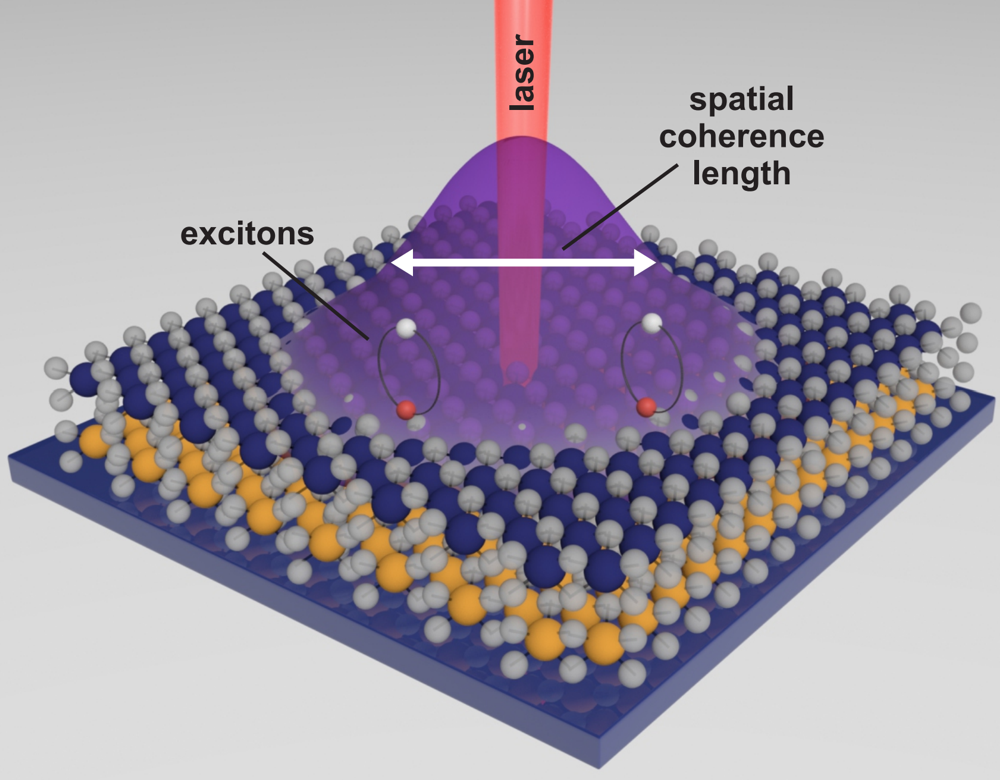
- Figueiredo/Technical University of Munich, www.physics.aps.org
[1] M. Brotons-Gisbert, B.D. Gerardot, A.W. Holleitner, U. Wurstbauer, MRS bulletin 49 (9), 914-931 (2024).
[2] L. Sigl et al., Phys. Rev. Research 2, 042044(R) (2020).
[3] M. Troue and J. Figueiredo et al., Phys. Rev. Lett. 131, 036902 (2023).
[4] C. Qian, M. Troue, J. Figueiredo et al. Science Adv. 0 (2), eadk6359 (2024).
[5] J. Figueiredo, M. Richter et al. NPJ Quantum Materials 10 (1), 96, September 16th (2025).
About speaker
Alexander W. Holleitner is an experimental physicist working on fundamental aspects of optics and electronics in quantum matter, ranging from many-body exciton ensembles to topological aspects of atomistic materials. After his postdoctoral stay at the University of California, Santa Barbara, from 2003 to 2005, he was junior professor at the Ludwig Maximilian University (LMU), Germany. In 2007, he got promoted to professor in physics at the Technical University of Munich (TUM). Since 2020, he is director of the Walter Schottky Institute and heading the Chair for Nanotechnology and Nanomaterials. Moreover, he is member of the excellence clusters Munich Center for Quantum Science and Technology, e-conversion, and the Munich Quantum Valley. He is co-founder and spokesperson of the MSc degree program on quantum science and technology, as it is jointly offered by LMU and TUM in Munich.